CSotD: Memorial Day 1918
Skip to comments
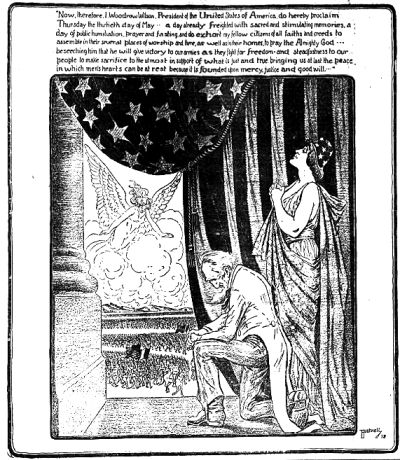
Since Memorial Day cartoons seem predictable, I thought I'd go back a century and see what they were doing then, when it was still called Decoration Day. E.A. Bushnell kicks off our coverage.
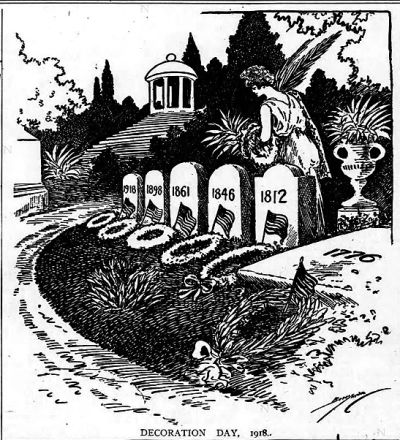
The US was in the middle of the World War, on the verge of having a million men in Europe and not far from the Second Battle of the Marne, so the cartoons that reflected the day referenced the war, as Clifford Berryman does above. (CSPAN video about him here).
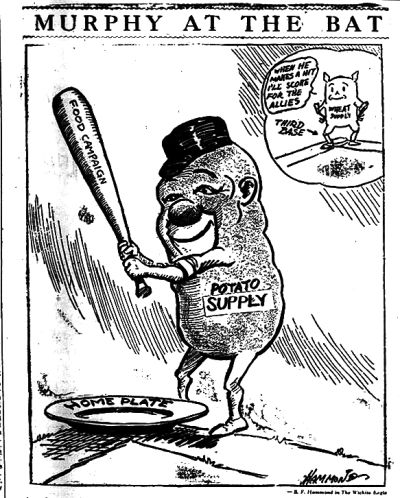
As you leaf through the papers from that day — which was the 30th and not some adjacent Monday, by the way — you find not only news of the war but admonitions to save food, with meatless days and, in particular, social pressure (not formal rationing) to conserve wheat by using other grains and by eating potatoes, as seen in this Ben Hammond piece.
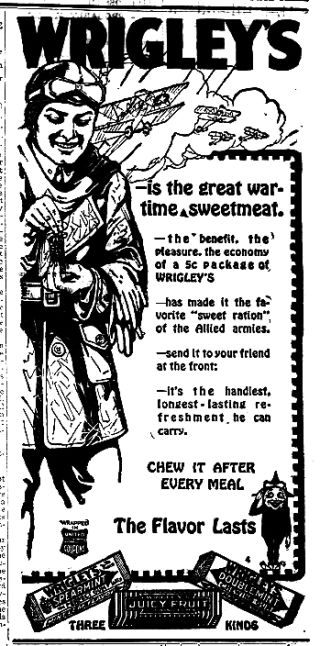
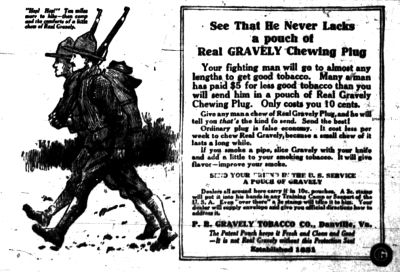
There were more self-interested pleadings in the paper as well. Apparently, having something to chew was a big deal for our brave lads.
But, before we get to the political cartoons, let's look at some strips.
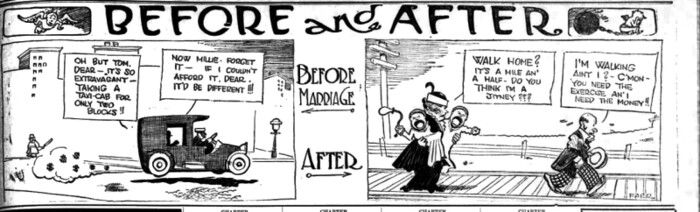
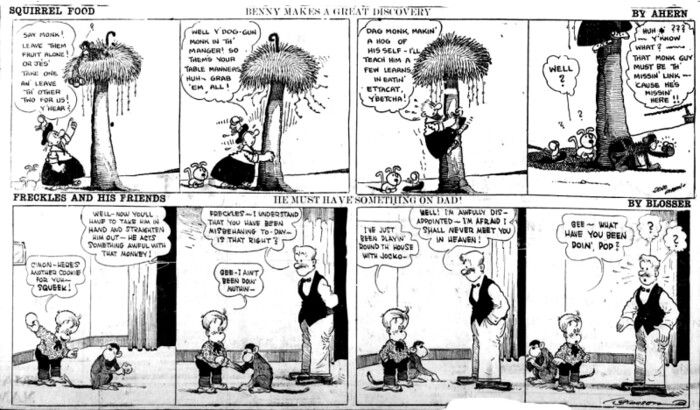
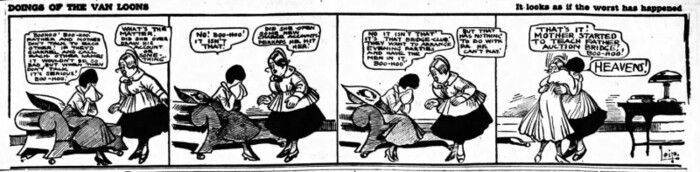
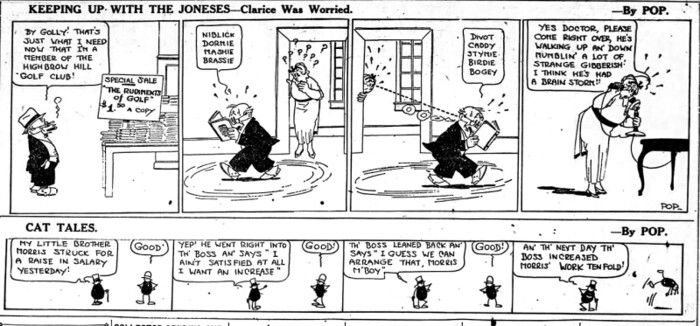
Many of them seem like one-offs, or at least, ones without a lot of legs, though you'll notice an early Freckles in there.
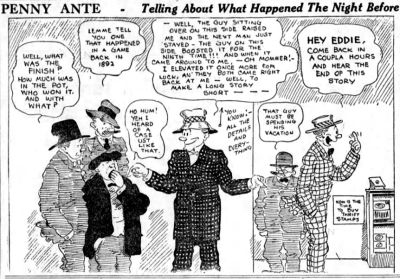
But it's hard to see where a strip like this could go, and it's not even signed. On the other hand, strips that consisted of guys sitting around a card table or out on the golf course talking were common, even without the wit, continuing characters and plotlines that would raise Our Boarding House above the rest. (Note that Our Boarding House cartoonist Gene Ahern was responsible for the Squirrel Food strip above.)
Interesting side note: Strips were mailed and didn't always show up in a timely manner, or perhaps the guys in the back shop couldn't be bothered. It's very common, in going through papers of a particular date, to find several different editions of the same strip.
For instance:
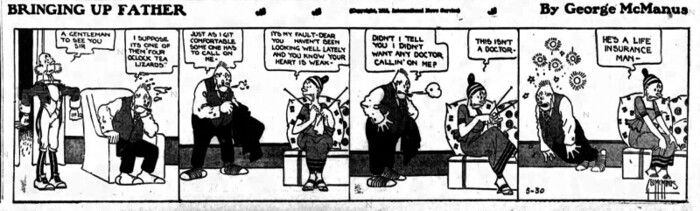
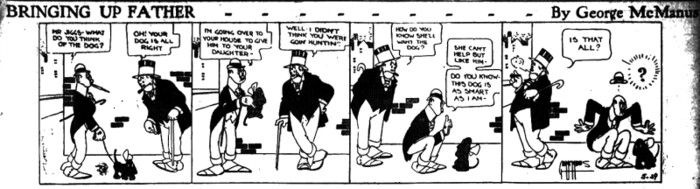
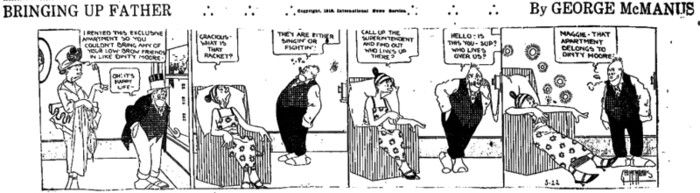
Note that the one on top is for May 30, and the latter was from a week earlier. And McManus wasn't the only one this happened to:
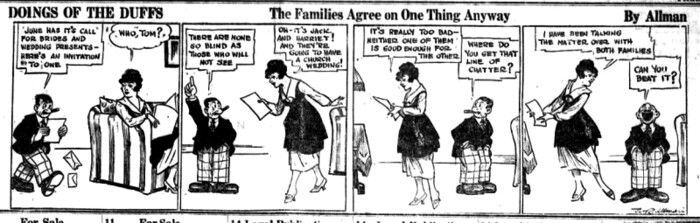
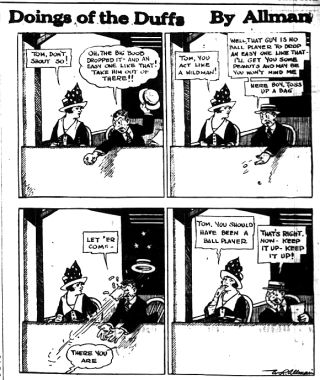
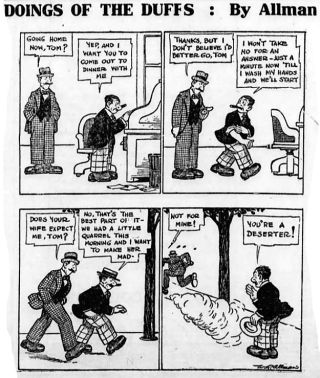 (Which reminds me that you might want to be a little cautious about who you credit with coming up with the idea of a strip that could be laid out horizontally or stacked.)
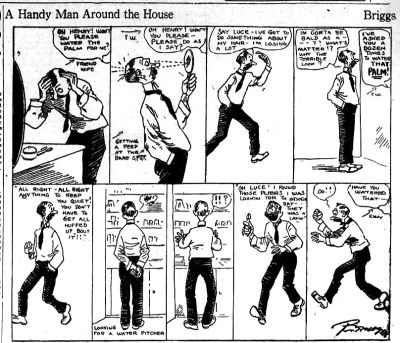 And McManus wasn't the only superstar in the papers. There were well-known cartoonists like Clare Briggs …
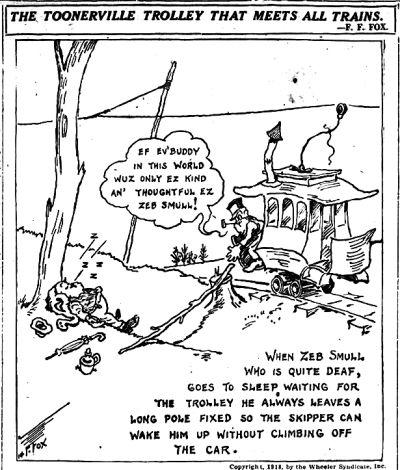

… and Fontaine Fox, twice (and I love the contrast in facial expressions between cheerful little brother and horrified adult) …
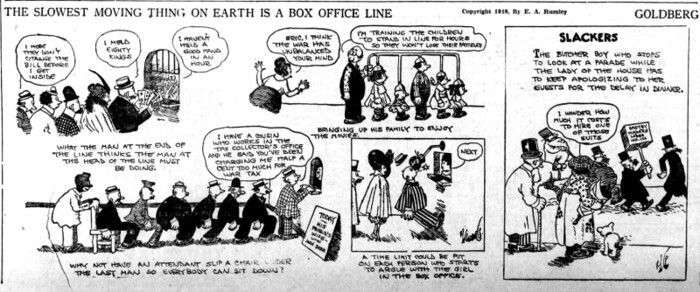 … and Rube Goldberg …
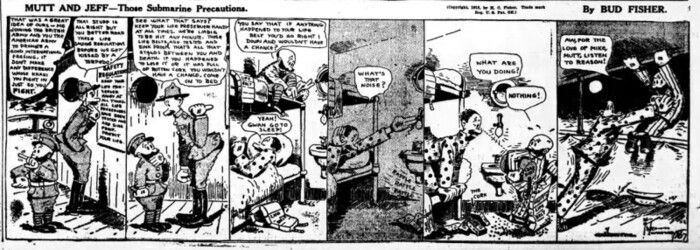
… and Bud Fisher, with one of the few strips I saw that directly referenced the war, though he wasn't entirely alone.
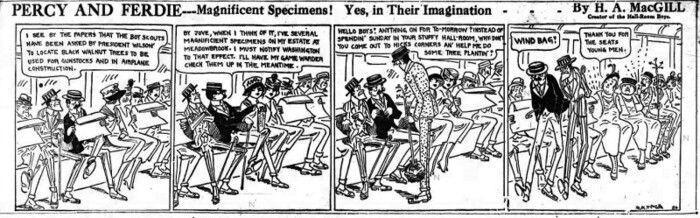 F'rinstance, this Percy and Ferdie not only references the war effort, but joins in the mockery of "slackers" that was a strong element throughout the papers, in both editorials and cartoons.
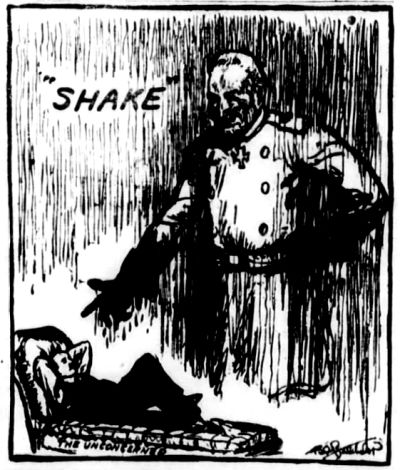
In the strip, it was mockery, but there's little humor in this C.D. Batchelor panel, in which the Kaiser greets a slacker as an ally.
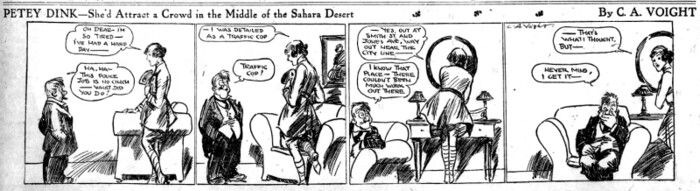 And the point of this strip may be that Petey Dink sure is one pretty gal, but she's doing her part for the war effort nonetheless.
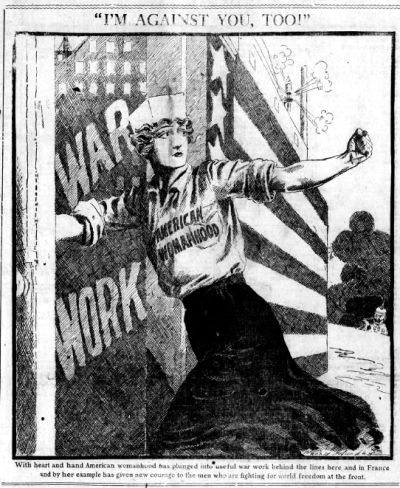 This poster was a little more explicit about the contributions of women in the workforce, well before Rosey drove her first rivet. The suffrage movement, which had purposely halted during the Civil War and turned its hand to winning friends through volunteer work, was more torn on the topic during the First World War, with the more conservative work-within-the-system types once more stepping down in deference to the crisis and the younger, more militant wing declining to do so.
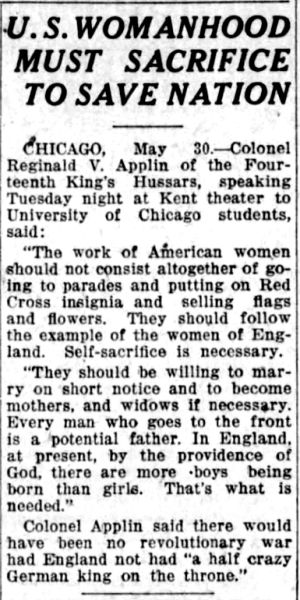 However, neither of them needed this, which I hope was only covered under the "get a load of this guy" category rather than as serious news.
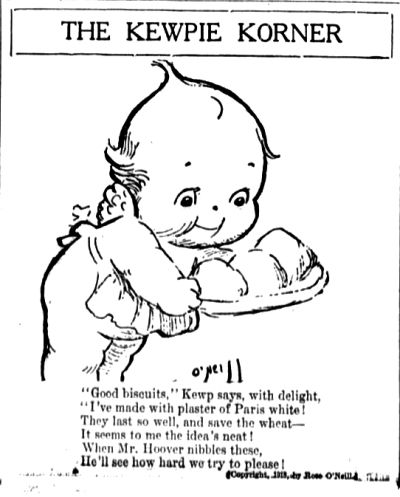 Even Rose O'Neill's Kewpies were participating in the war effort, though plaster biscuits may not have tickled the palate of the head of the US Food Administration, Herbert Hoover. (Are you anywhere near Springfield, Missouri, at the moment?)
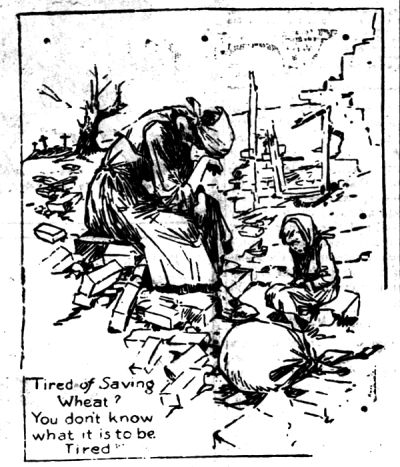
Laughs are good in hard times, but this apparently anonymous piece ran in several papers, emphasizing the genuine need for that effort.
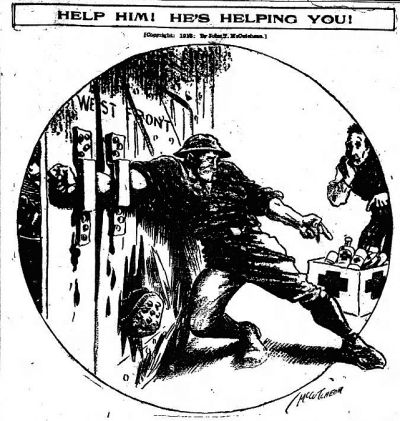
While this McCutcheon panel urged support of the Red Cross …
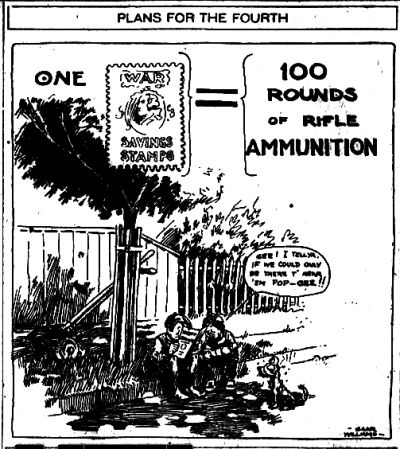
… and Gaar Williams took a lighter tack in promoting the purchase of Savings Stamps.
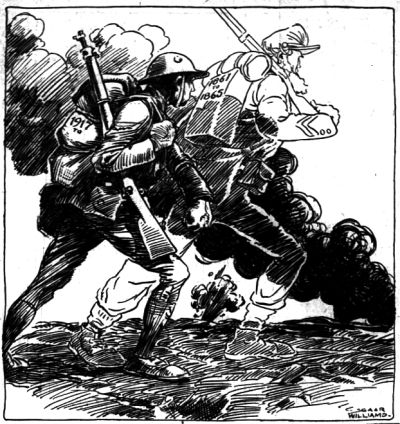
With so many Civil War veterans still alive, and so many others well-remembered by their children and grandchildren, it's not surprising that the original impetus for the holiday was called forth often, here by Williams …
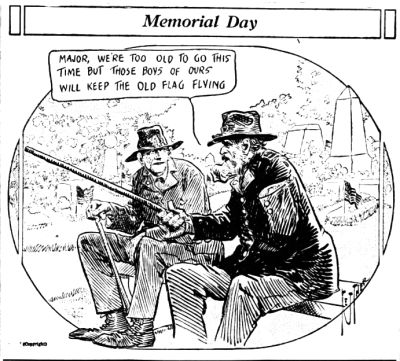
… and here by Magnus Kettner
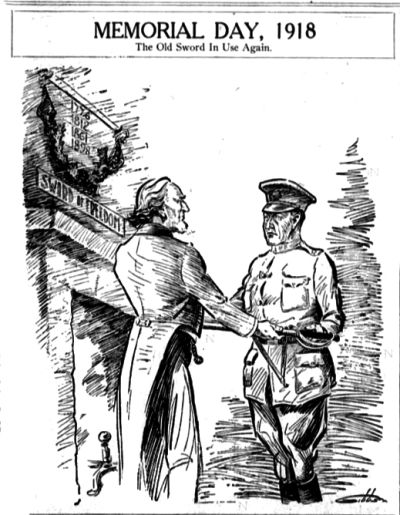
… while Gibbs repeats the citing of all past wars.
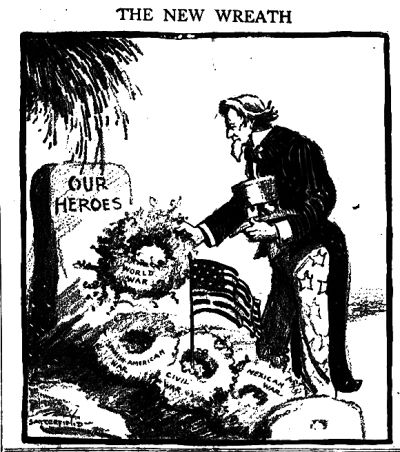
As did Bob Satterfield, and, when I saw this, I said to myself that he couldn't really bring his little bear in on something like this.
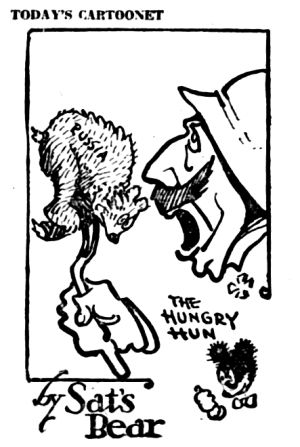
Only to discover a few newspapers later that he was using his trademark bear in one-column filler cartoons.
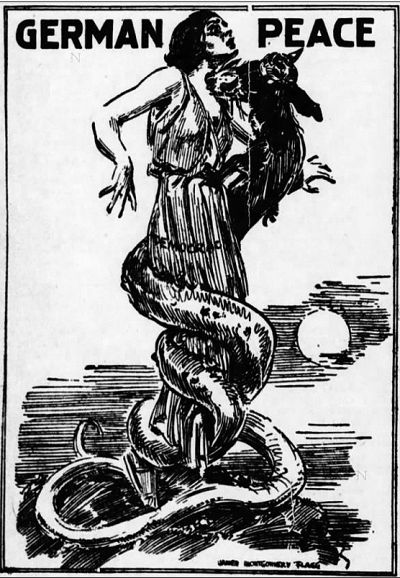
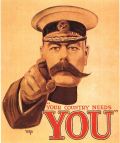
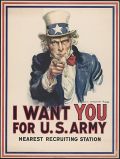 And here's a cartoon that is a bit grim, and which I include because the cartoonist, James Montgomery Flagg, became somewhat more famous for another of his works, done two years earlier, which was simply a remake of a 1914 British poster featuring Lord Kitchener … kind of sad, given how much good illustration work he hadn't intentionally copied on commission.
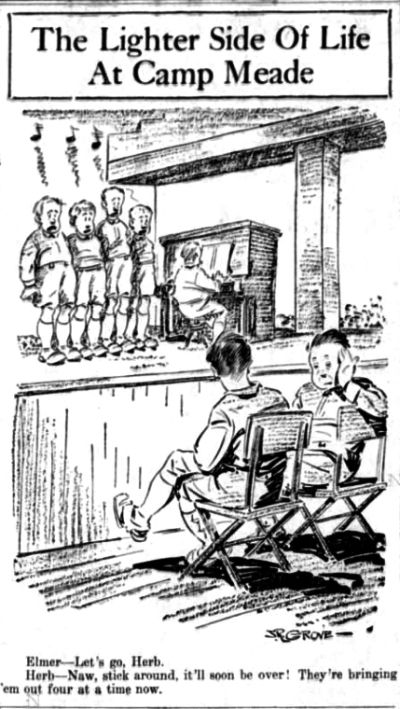
We can't end on that note, so here's a cartoon by Roy Grove about the lighter moments of a nasty war, next to which perhaps combat wasn't so bad.
If nothing else, it was a chance to see something of the world.
Mike Peterson has posted his "Comic Strip of the Day" column every day since 2010. His opinions are his own, but we welcome comments either agreeing or in opposition.
Comments