CSotD: Cultural Notes
Skip to comments
 Start with the news, from DD Degg at the Daily Cartoonist via Tom Heintjes of Hogan's Alley, with the smiling, self-posted face of Mark Parisi, who won the "It's Not Actually A Reuben" award last night in the category of Newspaper Panels for Off the Mark.
Only the big one at the end is the actual "Reuben" but the term has bled over into all the National Cartoonist Society Awards and only pedants fret over it.
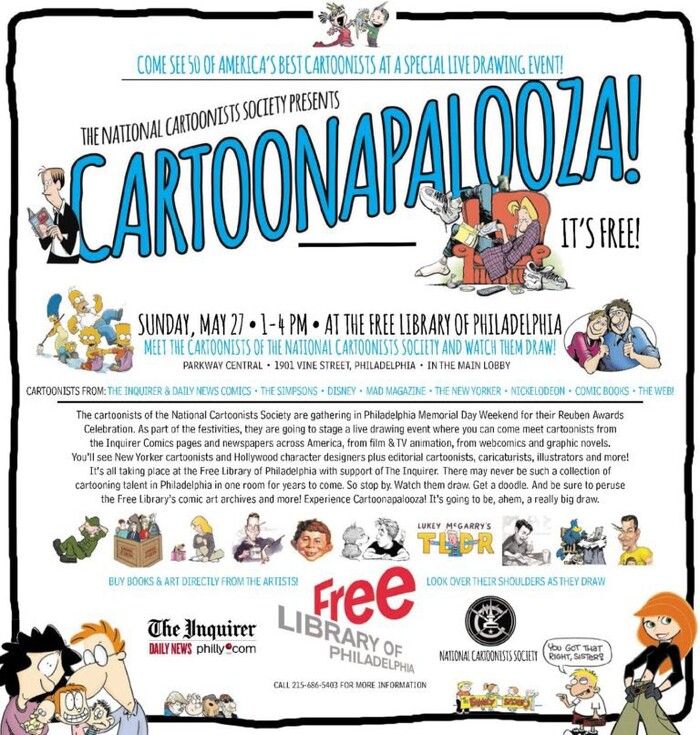
And a last reminder that, if you're anywhere near Philly, you should saddle up and get on over to this event.
Deflating Juxtaposition of the Day
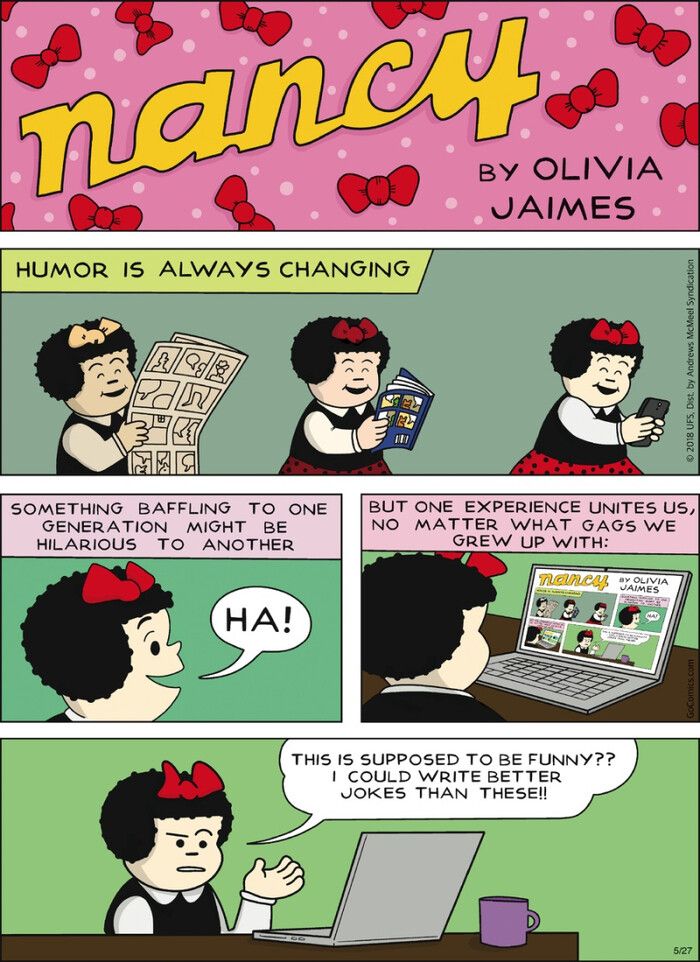
(Nancy)
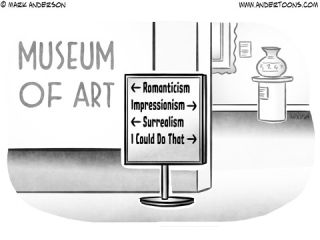 (
(I doubt either of these were specifically timed to run during the Reubens, but it is certainly true that humor is subjective, which is true of all art, and, boy, the collecting of cartoons for this blog is feast or famine.
There are days when I feel inundated with great gags and other days when I wonder if everyone took the day off, but there are also days when I come in looking for a laff and days when I come in looking for a fight, or, at least, not in an open, cheerful frame of mind.
I've learned to avoid social media at least until I've run through the humorous strips and am ready to get into the editorial cartoons.
Sometimes Facebook and Twitter make me actively furious at dishonesty and deliberate ignorance, and other times they just depress me with the way stupidity, sloth and self-interest seem to overwhelm all other instincts.
Second Juxtaposition
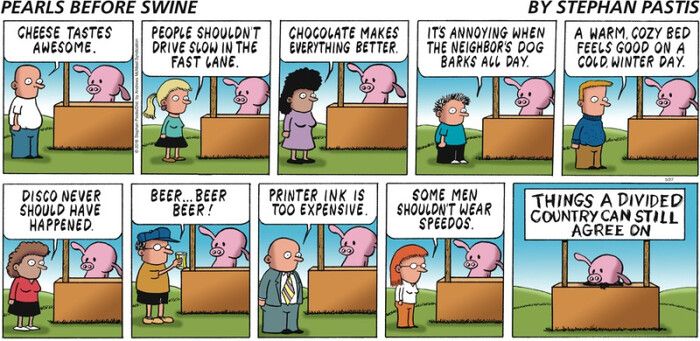 (
(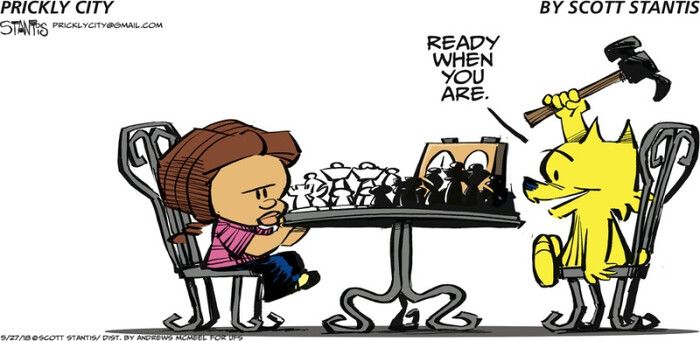 (
(The thing is, despite Pig's attempts to Bring Us Together, I'm almost — no, I think I am — more comfortable with the honesty of Prickly City, in which the point of a chess game is not to match wits and strategy but simply to destroy.
Even when we find something we can apparently agree on these days, it somehow seems to take on an aggressive, triumphalist atmosphere of hostile competition.
Someone says that a television show isn't particularly good, and we all chuckle, and then someone chimes in that he doesn't have a television and spews his dubious moral superiority all over an otherwise innocent conversation.
Oh, and he never eats at McDonald's. Heavens forfend!
At which some even greater moral force pops up to say he has never ever eaten at McDonald's.
Which is not only not about television but also means that he doesn't know a goddam thing about McDonald's, either.
But he does have an opinion to express.
If people only commented on things they understood, or linked articles they had actually read, or videos they had actually watched, social media would be a lot quieter.
Anyway, if I avoid such people until after I've run through my comics lineup, I'm far more apt to laugh at the jokes.
I suspect the effect goes a little deeper than that, but this is the world we live in (wo-oh-oh) and these are the hands we're given.
Juxtaposition #3
 (
(  (Rubes)
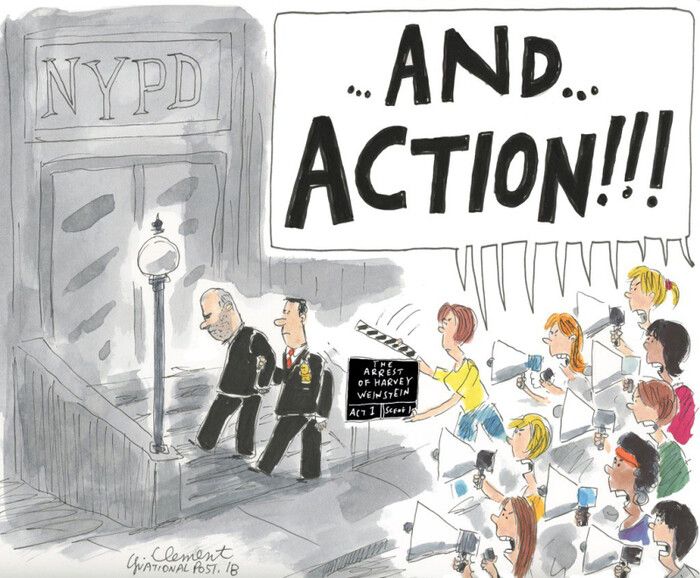
The nice thing about Harvey Weinstein — and there's a phrase you don't hear very often — is that, like Bill Cosby, he didn't leave us a lot of gray areas to ponder.
We all want things to be cut-and-dried, that the fellow in power says, "Have sex with me or you're fired" or not promoted or not cast or totally blackballed in the industry.
Just as it's easier all around if "rape" involves a beating or drugs, rather than a few glasses of chardonnay and an indefensible misunderstanding.
The Morgan Freeman situation is more cloudy, where some dubious jokes and intrusive hugs crossed a line he probably didn't realize was there.
Which doesn't let him off the hook, but maybe it should let him off the gallows.
Today, a lot of guys are walking around thinking about their pasts and wondering what damage they may have unwittingly left behind.
And that's just the guys who get it.
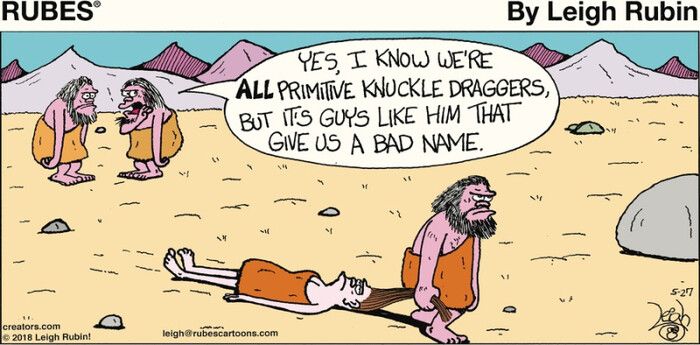
Which brings us to Rubes and the familiar archetype of the caveman dragging a woman around by the hair.
I like the cartoon, but the archetype is bullshit.
True, in a number of pre-industrial societies, raiding other communities to find mates did happen, but they also raided to replace other family members who had died and to generally shore up their numbers with compliant captives. In pre-industrial North America, most of the women who ended up as wives seemingly entered as servants, and often as children.
And most hunter/gatherer societies here were at least matrilinear if not matriarchal. Women didn't often have the universal power they held among the Iroquois, but even in the patriarchal groups out west, they had a lot to say about who married who, while divorce laws tended to be generous.
It's First World patrilinear societies in which the "drag'em off by the hair" stereotype was invented and persists.
Part of the tradition began with bad science and the belief that the sperm was a fully formed "seed" with the woman being the "fertile" ground in which the father's children grew. (Which is why royal brides had to be virgins — didn't want any seeds from past plantings coming forward later as happens so often in gardens.)
 Meanwhile, back in Hollywood: If nobody is accepting Weinstein's defense of the casting couch as tradition, nobody seems to deny its continued prominence in the industry.
And it's not just that.
It's more nefarious and more deeply embedded in our culture: It's the standard scene in which our hero kisses the struggling girl until she yields and admits she loves him.
And we grew up on songs written by men to be sung by women, and songs written by women who succeeded because they accepted the prevailing cultural norms.
It's not as simple as who wrote, or recorded, what:
This Lesley Gore hit was written by a pair of women.
While this one was written by two guys.
And don't get me started on Hal David:
Mike Peterson has posted his "Comic Strip of the Day" column every day since 2010. His opinions are his own, but we welcome comments either agreeing or in opposition.
Comments 3